Solid State Battery for Ebikes
Solid State Battery for Ebikes

Why Everyone’s Talking About Donut Labs’ Solid-State Battery
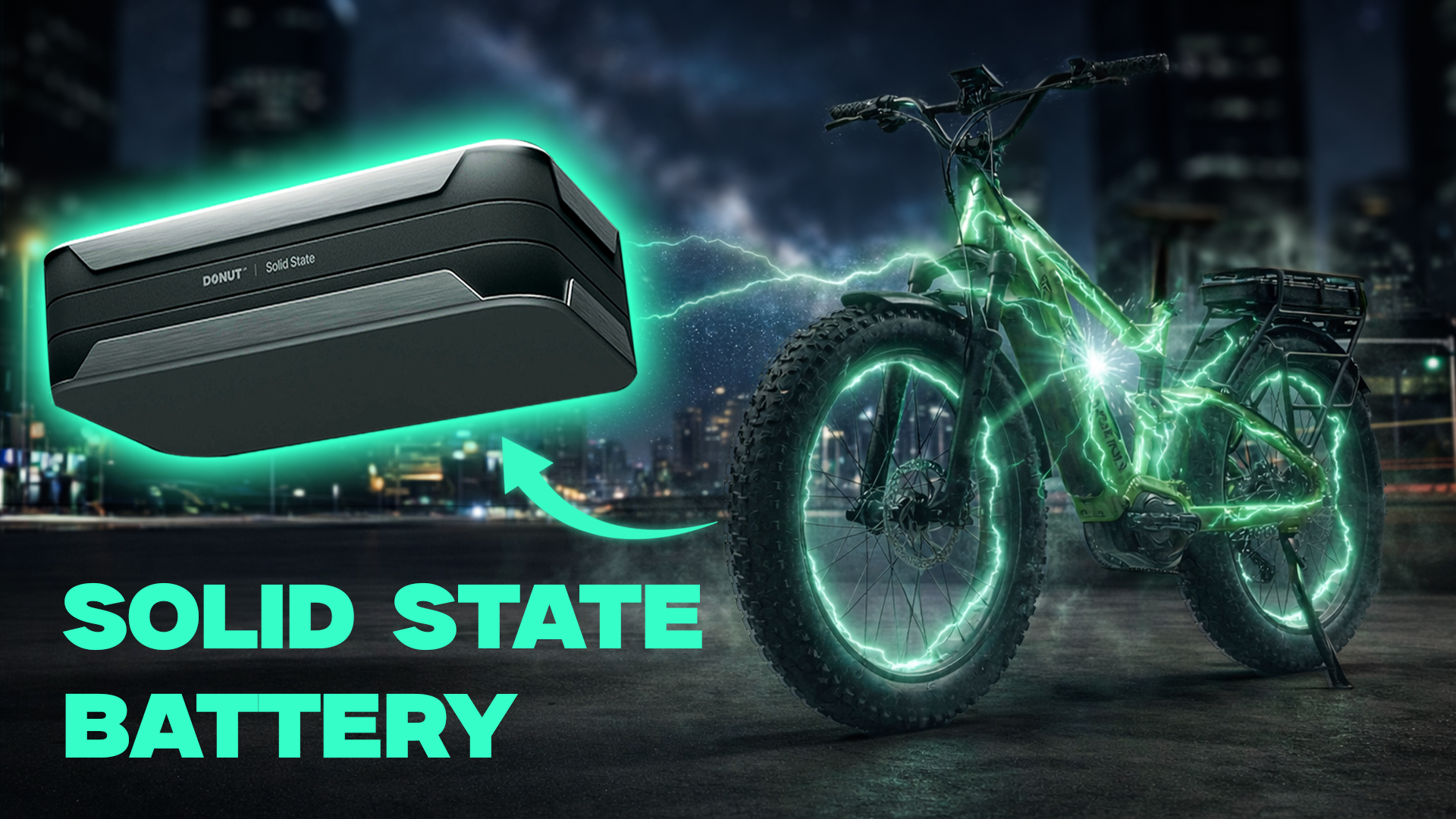
Solid state batteries represent the next frontier in energy storage technology. Unlike conventional lithium-ion batteries, solid state batteries use solid electrolytes instead of liquid ones, eliminating many safety risks and enhancing performance. For over a decade, the battery industry has been striving to perfect this technology, often projecting commercial availability around 2030. However, Donut Labs has broken this timeline with a production-ready solid state battery unveiled at CES, marking a significant milestone.
The Promise of Donut Labs’ Innovation
Donut Labs’ newly launched solid state battery is designed for real-world applications, including electric vehicles like the Verge Pro motorcycle. This battery boasts an impressive energy density of 400 watt-hours per kilogram, allowing either more power storage in the same space or a smaller battery pack with the same energy capacity. This advancement is particularly transformative for eBikes, where space and weight constraints are critical.
Enhanced Energy Density and Compact Design
Energy density refers to how much energy a battery can store relative to its weight. Donut Labs’ solid state battery delivers 400 Wh/kg, which significantly outperforms many traditional lithium-ion batteries. This means eBike manufacturers can either offer longer ranges by packing more energy into the same battery size or create lighter, more compact designs without sacrificing performance.
Ultra-Fast Charging Capabilities
One of the most exciting features of Donut Labs’ battery is its rapid charging ability. While conventional 48V eBike batteries typically require 7 to 8 hours for a full charge, this solid state technology can recharge to full capacity within 5 minutes at the cell level, and eBikes can achieve a full charge roughly in 30 minutes. This rapid recharge drastically reduces downtime, making eBikes more convenient for daily use.
Exceptional Battery Lifespan
Battery degradation is a common concern for electric vehicle owners. Donut Labs addresses this by designing batteries capable of withstanding up to 100,000 charge cycles. This longevity means the battery can last the entire lifespan of the vehicle, reducing the need for costly replacements and supporting sustainability goals.
Superior Safety Features
Safety is paramount, especially for batteries used in consumer products like eBikes that often charge indoors or in apartments. Traditional lithium-ion batteries carry risks of fire and explosions when damaged or improperly charged due to their liquid electrolytes. Donut Labs’ solid state battery eliminates these fluids entirely, minimizing fire hazards and making at-home charging safer than ever.
Transforming User Experience
By integrating solid state batteries, eBike manufacturers can offer consumers longer rides, shorter charging times, and peace of mind regarding safety. Riders no longer need to plan long charging breaks or worry about battery malfunctions, enhancing the overall usability and appeal of eBikes.
Industry Interest and Adoption Timeline
Since the launch, Donut Labs has attracted significant attention from eBike companies eager to incorporate this cutting-edge technology. While widespread adoption may not occur immediately, industry insiders anticipate solid state batteries becoming mainstream in eBikes by 2027, reshaping the market and driving innovation.
Reducing Costs Compared to Lithium-Ion
Cost is often a barrier to adopting new technology. Interestingly, Donut Labs’ solid state batteries are projected to be less expensive than equivalent lithium-ion packs. This price advantage applies across product tiers, making solid state batteries accessible for both high-end and budget-friendly eBikes.
Energy Density: Why 400 Wh/kg Matters
Achieving 400 Wh/kg in a solid state battery is a remarkable feat. For context, typical lithium-ion batteries range between 150-250 Wh/kg. This leap means eBike manufacturers can drastically reduce battery weight or increase range without altering the bike’s form factor.
Fast Charging Without Degradation
Rapid charging traditionally accelerates battery wear. However, Donut Labs’ design allows repeated fast charging cycles without significant degradation. This resilience is achieved through the solid electrolyte and robust cell architecture, ensuring consistent performance over thousands of charges.
Elimination of Liquid Electrolytes and Fire Risks
Solid electrolytes are inherently more stable and less reactive than liquid ones. Donut Labs’ all-solid-state design removes the flammable liquid components, making the battery safer during charging, use, and potential impacts. This safety enhancement is crucial for consumers who charge in homes or urban environments.
Expanding Beyond eBikes
The versatility of Donut Labs’ solid state batteries opens doors for wider electric vehicle applications, including motorcycles, scooters, ebikes, and potentially electric cars. Their scalable design allows manufacturers to tailor battery packs for various power and size requirements.
Environmental and Sustainability Benefits
Longer battery life and improved safety translate to fewer battery replacements and less electronic waste. Additionally, the potential to manufacture these batteries at lower costs supports more sustainable production practices and wider adoption of electric mobility.
Market Readiness and Consumer Adoption
Donut Labs’ achievement demonstrates that solid state batteries are no longer a distant concept but a near-term reality. As manufacturers integrate this technology, consumers can expect to see eBikes with dramatically improved performance within the next few years.
Conclusion: A New Era for eBike Batteries
Donut Labs has set a new benchmark in battery technology with its solid state battery, combining high energy density, ultra-fast charging, exceptional longevity, and unparalleled safety. For the eBike industry, this breakthrough promises to revolutionize how riders experience electric mobility, making eBikes more practical, reliable, and accessible. As the technology matures and adoption grows, solid state batteries are poised to become the gold standard for electric transportation.